
Moving to the Countryside
Life in London was good, but in 1968 we moved to a small village on the edge of the New Forest when my father was offered the position of principal bass clarinettist with the Bournemouth Sinfonietta, and later the Bournemouth Symphony Orchestra. Life became quieter for my mum, with a new rhythm of my father going out in the evenings for concerts or rehearsing during the day. The village was full of remarkable, erudite older women, many of them Oxford graduates. They graduated from Oxford University in the early 20th century but ended up together in Winkton because of the First World War. Next door to us lived two incredible sisters: Dorothea Rowe, founder of the Bournemouth Little Theatre and a director at the Palace Court Theatre. She was also a renowned teacher at Bournemouth High School and a contemporary and good friend of Dorothy L. Sayers, a well-known crime writer, and Benedicta Jeannette Hanbury Rowe, known as Beana, a distinguished British historian, who knew a great deal about the history of Winkton. Others in the village included Mrs Mandeville, a retired head teacher, the Jolliffe sisters opposite in Monks Revel, who were the village squires, and Elizabeth Dacome, who lived in Gosfield Cottage, would host visiting bishops. Winkton has a rich ecclesiastical history and was built on the remains of an old monastery. There are many healing wells dotted about the village, including in our home, and discovered when building an extension, but sadly, we were told to fill it in by planning consent. The wonderful elderly woman of the village encouraged me with a strong belief that everyone could reach their full potential. Above all, they nurtured creativity.
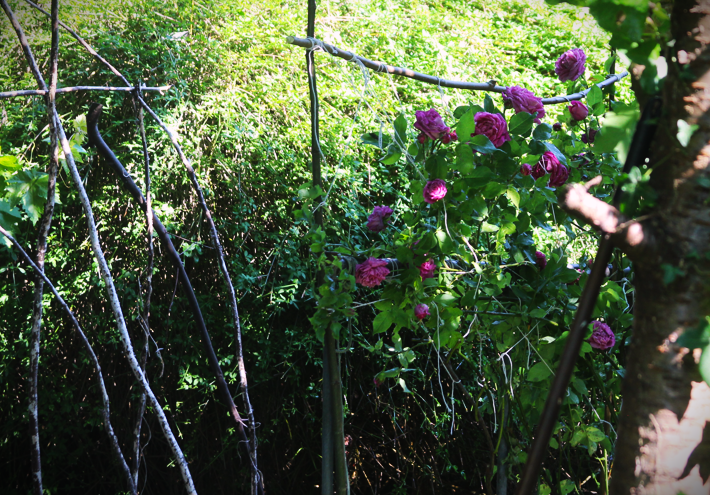
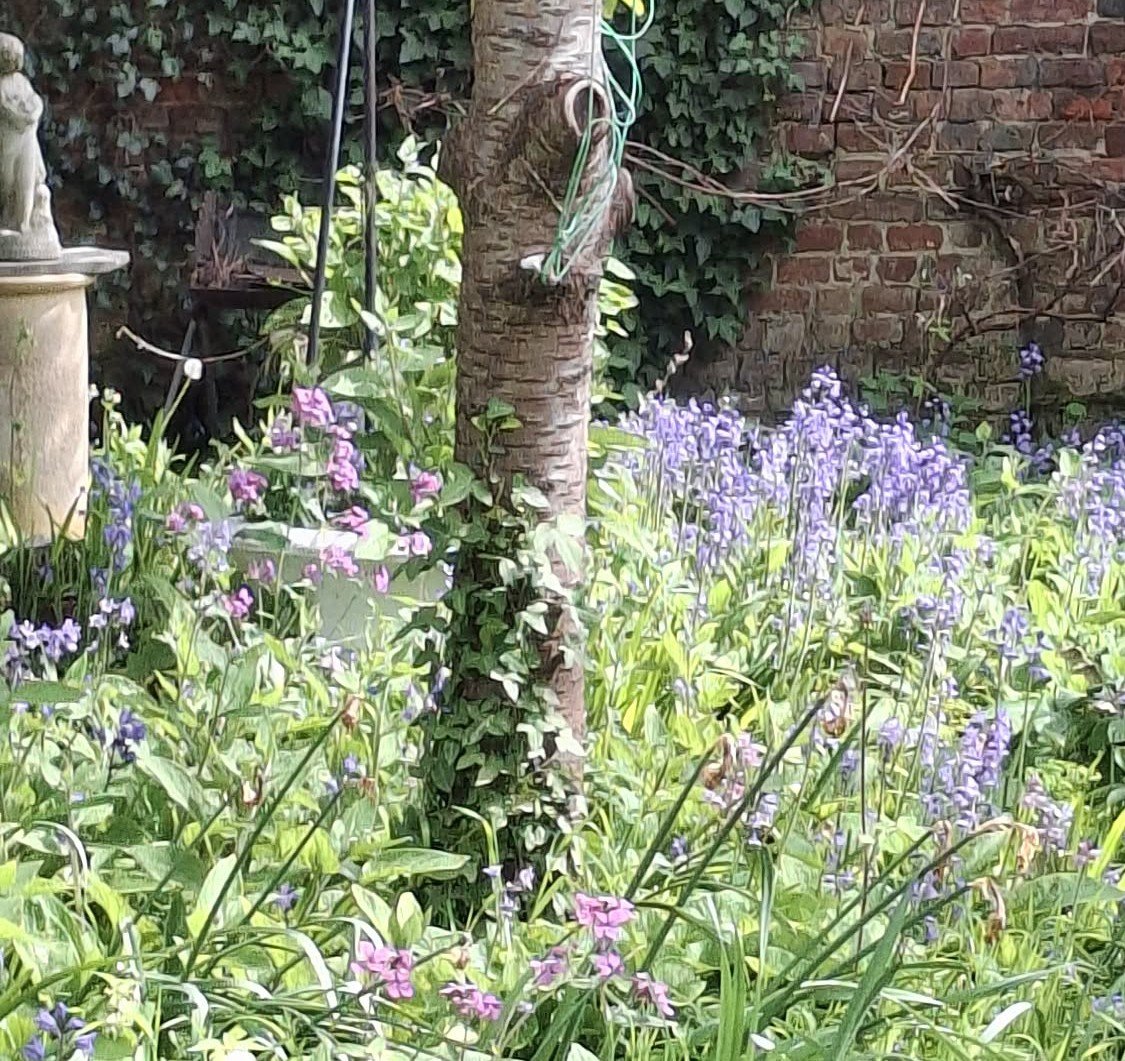
When we first moved into Winkton Lodge Cottage, the house was spidery and dingy, and the kitchen had an old wood-fired range. The walls were painted cottage green and were stained by previous gas lamps. There was a large Dublin sink by the window, looking over the garden. On the side of the Kitchen was a coal skuttle and a larder, which was later turned into the dining room, where the well was. Not long after moving, there were ghostly sounds from the kitchen that my mum and dad called Mr Plumley. They found an old photograph of Mr Plumley and hung it in the dining room- a previous owner who was the gardener for the big house next door (Homefield ). The garden was completely walled and was once the kitchen garden for the Homefield, with ancient roses, trees, and rambling paths – like a scene from the Secret Garden. It is still beautiful today, although a bit wild, and the last time I visited was covered in bluebells,
Across the road from us was Miss Jolliffe’s large house, with a distinctly Edwardian feel, and its long gardens stretched down in terraces to the River Avon. Each level was reached through small gates and steps, and in the spring, the garden was carpeted with primroses, which I was allowed to pick and take home. The lower part of the garden was left wild, and to reach the river, you crossed little bridges through bulrushes. There were water rats along the banks, and kingfishers darting through the trees. A punt was tethered at the river’s edge, and we were invited to take it out. On one occasion, with Simon Rattle visiting, all of us squeezed into the tiny punt with the ambitious plan to reach a pub, further down the river. However, with a combination of inexperience and low bridges, it did not quite go to plan, and we eventually found ourselves scrambling up a muddy bank, attempting to rescue the punt.
From time to time, my father was still called back to play with the Royal Ballet and D'Oyly Carte Opera Company, and I fell in love with the dramatic, immersive sound of the full orchestra, the ethereal movement and storytelling of ballet, and the theatricality of opera. Unfortunately, my health was a challenge, as I had severe asthma, which regularly took me to the hospital, and my mother became a stay-at-home mum to support me. She was an extraordinary teacher, and although I missed a great deal of school, I did not lose out — I was immersed in visual arts, music, history, literature, and all the skills I now use in my work. The house was full of books of every kind, and there were no restrictions to reading them – I would take them off the shelves and delve in. Despite being surrounded by all these books from classics to murder mysteries, I would only dip in here and there, or look at the pictures in the art and history volumes, However my mum would read to me at night, children's classics, Tom's Midnight Garden, The Secret Garden, A Dog So Small and The Possum Book of Practical Cats, etc. and also more grown up books such as the Diary of a Nobody. It’s very easy to hide dyslexia and ADHD when you come from a literary family – the difficulty reading is hidden by a literary knowledge and word use beyond one's years, because it’s natural. It’s the processing of language and words, both spoken and written, and the sequencing of letters that is hard for a dyslexic, coupled with ADHD and ASD – these conditions are comorbid with many crossovers, and are lifelong. They considerably impacted on my everyday life and school. I still fall asleep when reading, or space out from too much information all at once – it is much like when a computer freezes, when you have given it too many demands. I would devour knowledge as a kid by watching TV – contrary to modern thought on screen time, I don’t think it is a bad thing for a neurodivergent child to be allowed screen time, as long as this is part of learning, and not be the’ be-all and end of’ of life, or a substitute for family time. What I brought to my own children was allowing them to have free access to all kinds of books on the bookshelves, so that they could choose for themselves what to read or look at. Both my children have autism, and my youngest has always chosen to learn for himself and is now a qualified mixologist, and my eldest is a dancer with flair for cosplay. I am forever grateful for having the right encouragement and inspiring people around.