
Primary School Years
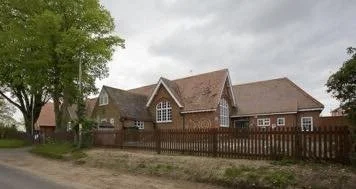
I look at photographs of my Primary School now, and it looks wonderful, but back when I attended in the 1970’s, I struggled — not only because of my health, but because I never quite fitted into the way of its cultural rhythms, and the day-to-day life of the school. I already had a sense of a much wider world than my small rural primary school could hold, and I found the routines and expectations overwhelming. I loved art and science, and would ask questions, and wanted to learn, but not in the conventional way as set down by the curriculum of the time. I got things “wrong” according to perceived expectations of the school and head teacher - I painted the wrong paintings, wrote the wrong type of poetry, gave the wrong answers, i.e. not what the teacher expected or wanted as an answer, the wrong ambitions and the wrong clothes. In this rural school, girls sewed, and the boys did art, with very traditional goals. By the time I was 10 years old, I had learnt to drift off into my own world. Although I was ahead in my knowledge and language, I struggled with reading, spelling tests and social expectations and making friends at school. I would hide in the lobby between the classrooms, pretending to be asleep, just to avoid the school day, and more seriously, I could bring on asthma attacks to stop going to school. I tried very hard to fit in but failed; however, my imagination and my inquisitiveness grew. At home, the frustration would come out in meltdowns and nightmares. I was misunderstood and bullied by both children and teachers, who not only judged me but also my family. At the age of 11, it was suggested that I should be placed into the sixth form of a special school for secondary education, as the local comprehensive was considered “unsuitable”. My parents chose not to pursue this suggestion, and with the support of a child psychologist called Ambrose, we were advised that we could turn the offer down and that the council would still be responsible for my education.
I saw several child psychologists, eye specialists, and medics, but none of them was able to offer any real solutions or explain why I was like I was. I have since been diagnosed with Autism (previously Asperger’s, now part of the autism spectrum), ADHD, and Dyslexia, with possible Dyspraxia, as an adult. I am always happy to talk with anyone navigating similar experiences. Later, while running Whirlwind Theatre, I undertook an MA (Ed) focused on improving the experience of neurodivergent people have within both the theatre rehearsal room and the school classroom. In the 1970s, it was rarely recognised that girls might have these conditions. There was still a lingering influence and hangover of older ways of thinking, and this misunderstanding hasn’t entirely disappeared now. The world, I feel, is desiring to move back towards some of those older ideas, as true inclusion demands change, and change can be uncomfortable and costs money, especially in times of diagnostic catch-up. It was not just girls that were overlooked back in the 1970’s, but boys too, especially from lower social and economic backgrounds. The educational system has failed many people over the years, and neurodivergent children grow up to be neurodivergent adults. The past does not have to dictate the future, and we should seek change to allow both children and adults to thrive. I feel very grateful to have had the support of others to achieve my goals in life but still working out how to achieve them daily.